
After the disruptions of the pandemic, wherein many rug manufacturers and designers were forced to focus primarily on simply maintaining existing collections, the industry is abuzz again as brands come up with exciting new designs and innovations. This is good news for the local economies of production regions, and weavers too are benefiting from an increase in orders. Yet with this return to ‘normal’ comes a return of the typical challenges to which the industry is prone: challenges that need to be addressed in order for it to continue thriving.
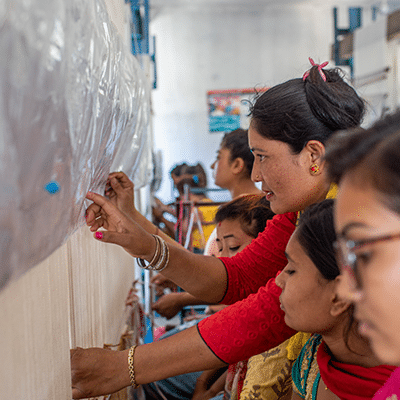
The foremost problem faced almost universally across carpet production regions is a shortage of weavers. While the economies of these countries have developed and new job opportunities have emerged, the rug industry often fails to keep pace in its efforts to establish weaving as an attractive and sustainable livelihood.
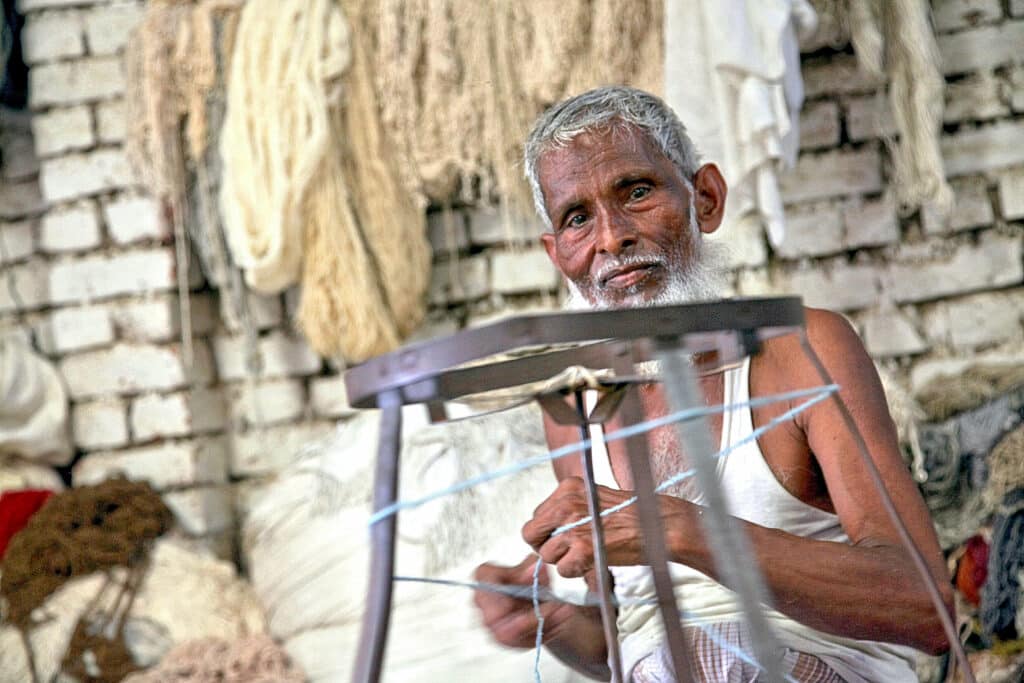
India continues to be a major powerhouse and leader of international carpet manufacturing. The government has taken steps to improve the country’s huge artisan workforces’ social security situation by offering benefits such as retirement provisions. However, further efforts are required to bring the working conditions of weavers and other artisans more in line with those of more formal industries. For example, while weavers’ participation in new schemes in urban and centralised facilities is high, that is often not the case in rural areas. The Swiss fair-trade NGO Label STEP continues to support home-based weavers in the villages and ensure they also benefit from these new schemes.
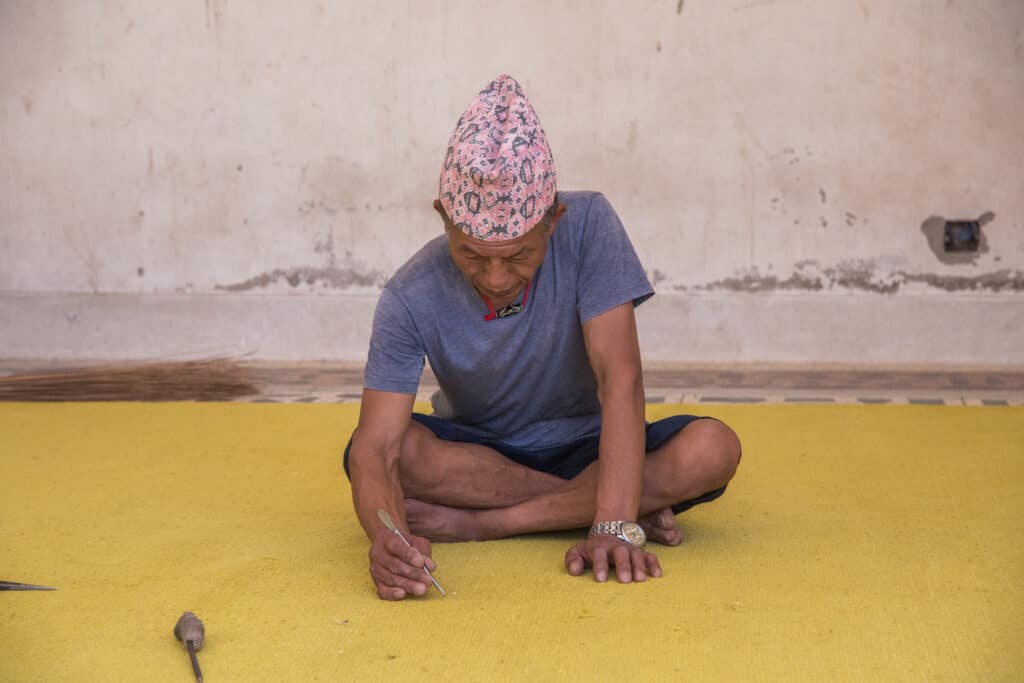
Similarly, in Nepal, the government has upgraded its labour laws to provide increased social security to its craftspeople, but real-life implementation is still lacking. Millions of Nepali continue to leave the country as migrant workers, including many young people who used to come to Kathmandu from rural areas to work as carpet weavers. Through its ‘Artisan Village’ project, Label STEP, with the support of UK Aid, has found that one solution is establishing attractive weaving jobs directly in the countryside, providing locals with an alternative to labour migration.
By far the most challenging situation faced by weavers today is in Afghanistan. The country’s disastrous humanitarian situation is affecting the carpet community severely, particularly since the vast majority of weavers are women, who are being confronted with escalating restrictions on their freedoms. Together with partners like Turquoise Mountain and international donors, Label STEP is supporting the Afghan carpet community through medical services and reliable livelihoods for thousands of weaver families.
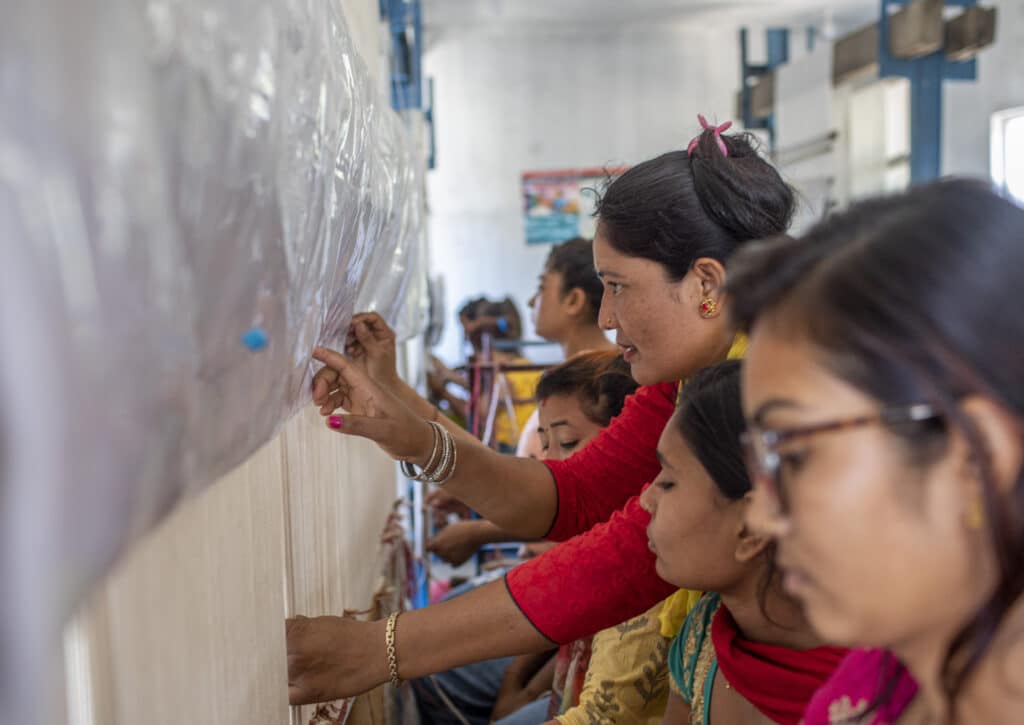
The crisis in Afghanistan has also incurred a rise in refugees in neighbouring Pakistan—while large shares of Pakistan’s population continue to struggle with the aftermath of last year’s countrywide flooding. By connecting displaced Afghan weavers with Pakistani carpet manufacturers, Label STEP hopes to combat weaver shortages while providing these weavers with reliable jobs and much-needed income.
Most countries are suffering under the current global political and economic situation, and, too often, these conditions disproportionately impact artisan communities. This is particularly true for Iran, where weavers’ wage increases can’t keep up with the rampant inflation. Such hardship is further compounded by the crackdown against the people’s ‘Women, Life, Freedom’ revolution since September 2022.
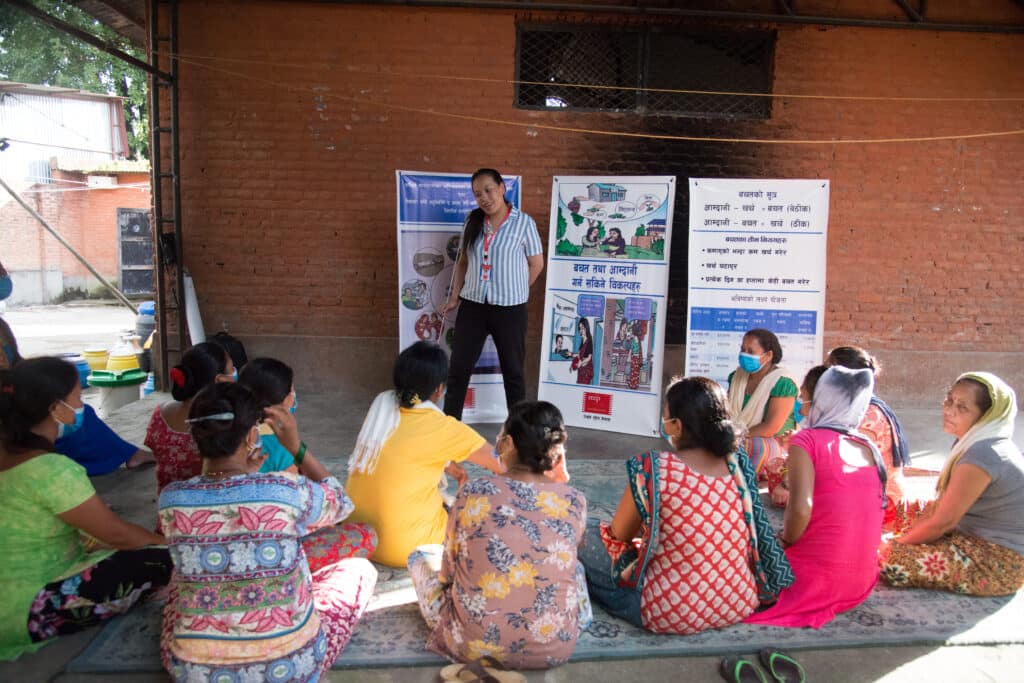
Some of Turkey’s famous carpet producing regions sustained damage during the recent devastating earthquakes in the country and neighbouring Syria. Apart from this tragedy, Turkey’s carpet manufacturing has decreased substantially over recent decades and the producers have struggled to find a sufficient number of skilled weavers. Kirkit Rugs, a Certified STEP Partner, has offered one potential solution with its model workshop in Ushak, which provides local weavers with excellent working conditions and employment benefits.
Finally, in Morocco, Beni Rugs offers another innovative and leading example of how weaving can be reinvigorated as a proud and beneficial profession with its Marrakech-based production facility. The beautiful, centralised facility is not only best-in-class locally but internationally too.
Morocco’s artisanal sector also stands to benefit from the launch of a comprehensive strategic campaign from Maison de l’Artisan, a public institution charged with promoting Moroccan handicraft products. The programme’s early results are encouraging and offer a model for how well-designed public support can benefit both artisans and national economies at large, and create a sustainable rug industry for the future.