
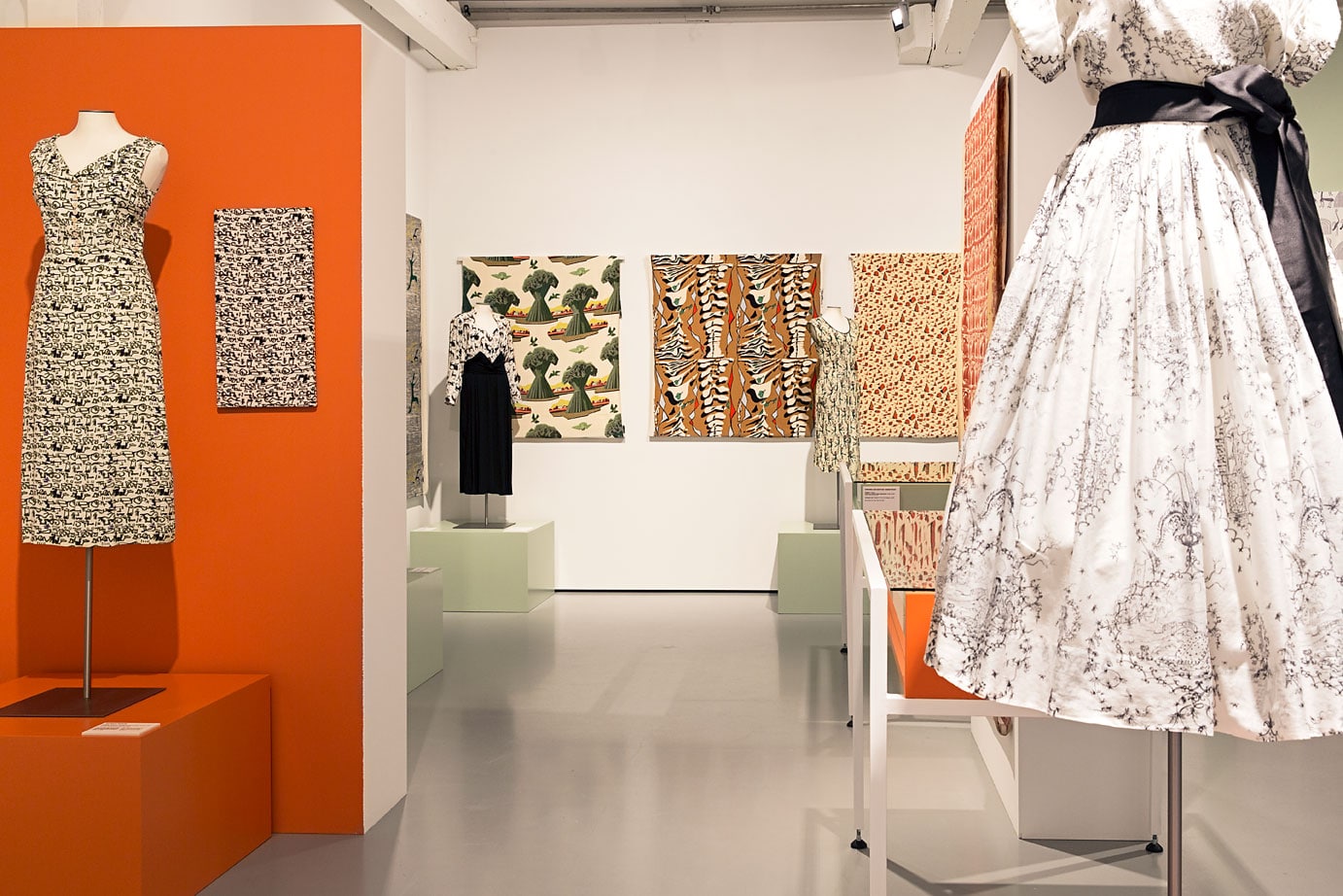
Artist Textiles at the TextielMuseum Tilburg
‘Artist Textiles. Picasso to Warhol’, which recently showed at the Fashion and Textile Museum London, has moved to the TextielMuseum Tilburg. Offering the fascinating history of artist textiles within Europe and America from the last century, the show is a visual treat for lovers of art, textiles, fashion and interiors. Textiles designed by Dali, Miro, Picasso and many other big names, open up a new avenue into the understanding of each artist’s oeuvre. The show closes in Tilburg on 14 September 2014.
See below for the extended version of Lucy Upward’s article on the show in London from COVER 34.
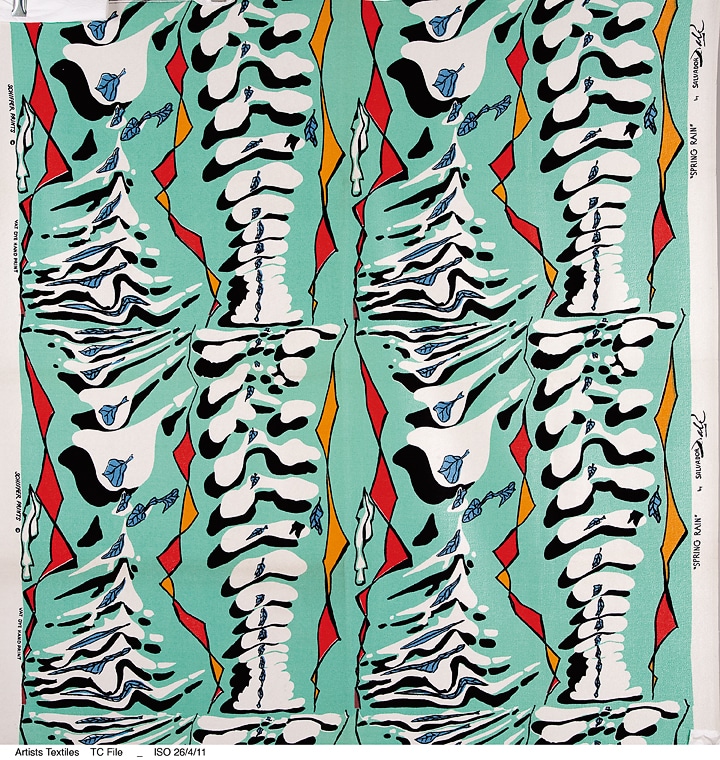
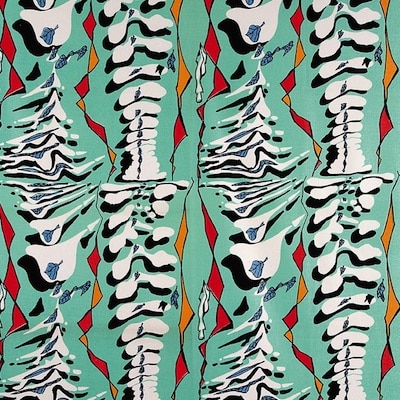
Spring Rain furnishing fabric, 1949, designed by Dali for Schiffer Prints
Portrait of the artist as designer
‘Art Textiles: Picasso to Warhol’ could perhaps be renamed ‘Dufy to Calder’ as Fauvist painter Raoul Dufy was in fact the first major 20th-century artist to be involved in textile design. Indeed, the introductory section of the show, ‘1910–1939’, begins with Dufy and his collaboration with French couturier Paul Poiret, a major figure in 20th-century fashion, responsible for freeing women from corsets. The display’s final exhibit is a screen-printed fabric of circus figures by American sculptor Alexander Calder, made for his retrospective exhibition at the Whitney Museum in 1976.
The impressive exhibition focuses on textile design from Europe and the USA – in terms of artists dated 1910–1976 – and is no small undertaking. It is largely based on the collections of textile experts and curators Richard Chamberlain and Geoffrey Rayner, with some additional loans. Despite the number of fabric examples on show, a common thread and clear message runs throughout: that this body of work, by a variety of groups in various locations, was accomplished to raise the profile of textile art to that of fine art. With some exceptions, the aim was not to produce work accessible only to the elite, but to create fabrics that anyone could buy.

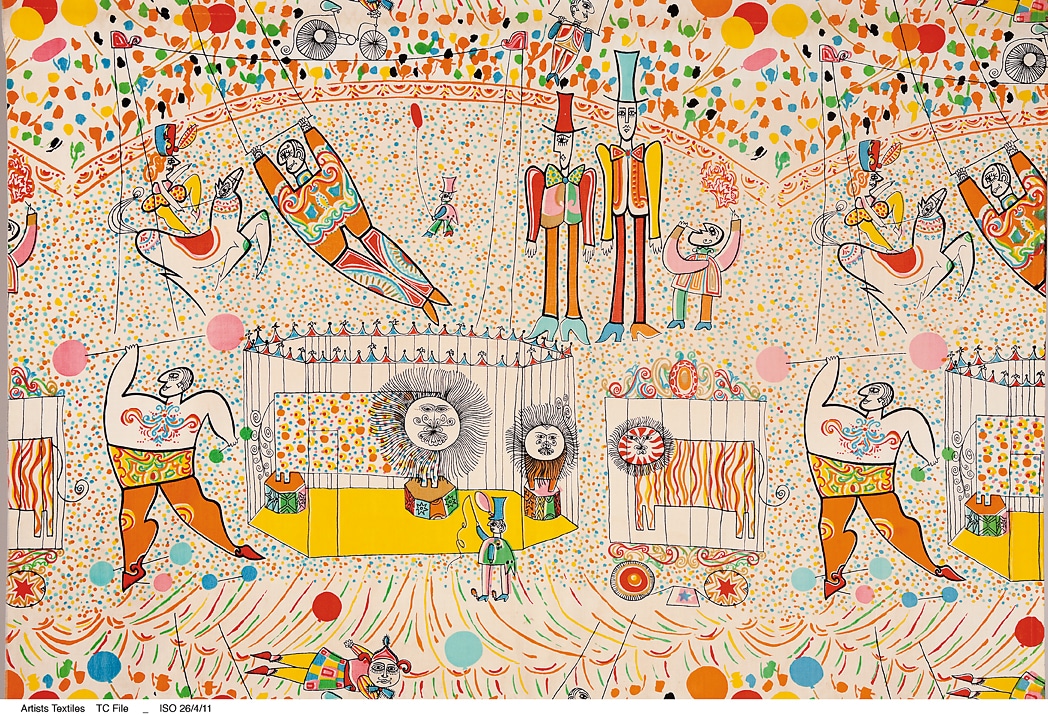
Cotton border print, circa 1955, Warhol design
The work of the Wiener Werkstätte and Josef Hoffmann influenced Raoul Dufy’s creations for Poiret’s interior design business Maison Martine and his subsequent work for French textile manufacturer Bianchini-Férier. He produced an astonishing 4,500 designs for the latter, from 1912–1928. Textile design became his art form, featuring modern, everyday subjects like sport and Charlie Chaplin – as in his Futurist design Charlot. This approach had never before been seen in the field, and it soon caught on across the western world.
Russian abstract painter Sonia Delaunay also worked for Bianchini and became another large influence on textiles in the 1920s and 30s. At that time in Russia Constructivism rejected autonomous art in favour of art for social purpose; many artists from the movement got into textiles as a means to produce art for ‘the people’.
Meanwhile the US had artist Ruth Reeves raising the profile of textile arts. In the UK, the Omega workshops were working to the same goal, with textiles like Duncan Grant’s velvet furnishing fabric designed for use on the P&O liner Queen Mary. The FTM show also offers a wonderful hearth-rug by Ben Nicholson titled Slinky, featuring a Constructivist image of his dog. This was exhibited in the Lefevre Gallery in London in 1933.
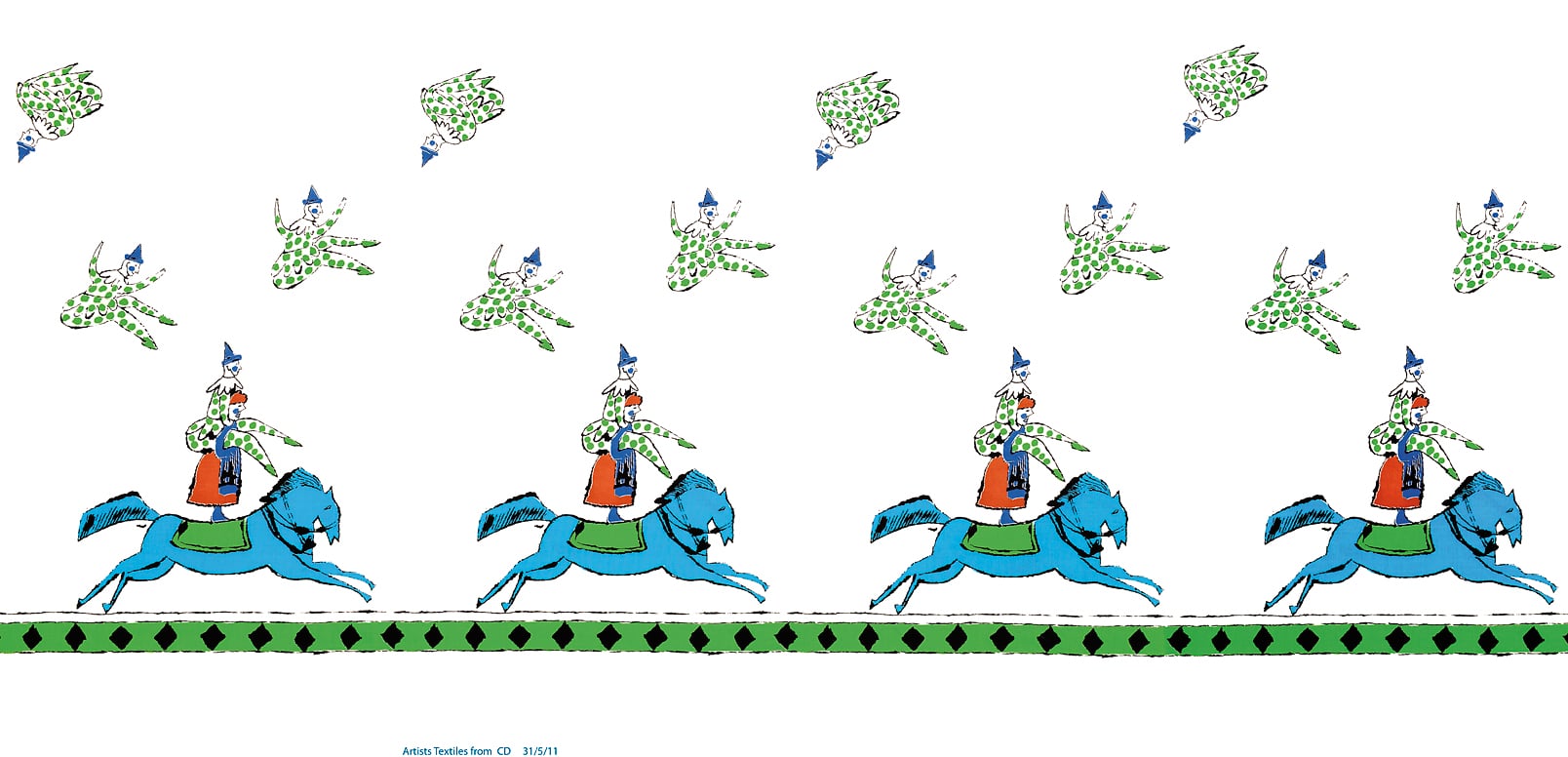
Cotton border print, 1955, design by Andy Wathol
During the war two remarkable initiatives occurred. In London Ascher Ltd began employing artists like Graham Sutherland and Henry Moore to produce designs for textiles. This led to thirty-seven of the Ascher artist squares being exhibited at the Lefevre Gallery in 1947 as framed art on the wall. Simultaneously in New York, Wesley Simpson Custom Fabrics Inc. commissioned work from Surrealist artists such as Marcel Vertès and Salvador Dalí. Dalí produced Number Please, based directly on the little-known animation of 1945 that he made with Walt Disney (also showing at the FTM).
The Surrealist fabric images were loved by the public and their influence spanned decades. They inspired everyone from the Folly Cove Designers of Massachusetts to the more exclusive Edinburgh Weavers. Household labels Horrockses Fashions and Hammer Prints both used designs by sometime-Surrealist Eduardo Paolozzi. All this is represented here, plus a wonderful display of ‘Modern Masters’ – Miró, Braque, Chagall, Leger and Picasso, who would design only for the masses, not an elitist audience. It was American textile producer Dan Fuller who persuaded Picasso to design a range of fabrics for him; and it is thanks to curator Richard Chamberlain that we know Picasso’s full repertoire.
Chamberlain had seen adverts featuring Picasso textiles, but when he wrote to the Picasso Foundation for information he received a curt note that no such thing existed. This didn’t stop him: ‘I saw it as my crusade to find out what he did do, and he did quite a lot,’ he explained on a tour of the show. What Chamberlain uncovered included beautiful prints for Bloomcraft and rather surprisingly skiwear for US brand White Stag.
Similarly it was Chamberlain who rediscovered the full complement of textiles created by Andy Warhol, a major commercial artist in the 1940s before embarking on his soup cans and Marilyn faces of the sixties, but little known as a fabric designer. Through tracing Warhol’s friend Steven Bruce, for whom the artist designed textiles, the curators found gems such as the fabric Ice Cream Sundays and a beautiful border print of a clown on horseback. Warhol now sits alongside Pop Art queen Zandra Rhodes, and the duo are followed by New York illustrators Saul Steinberg and John Rombola, before Alexander Calder’s clowns bring the curtain down on this magnificent show.
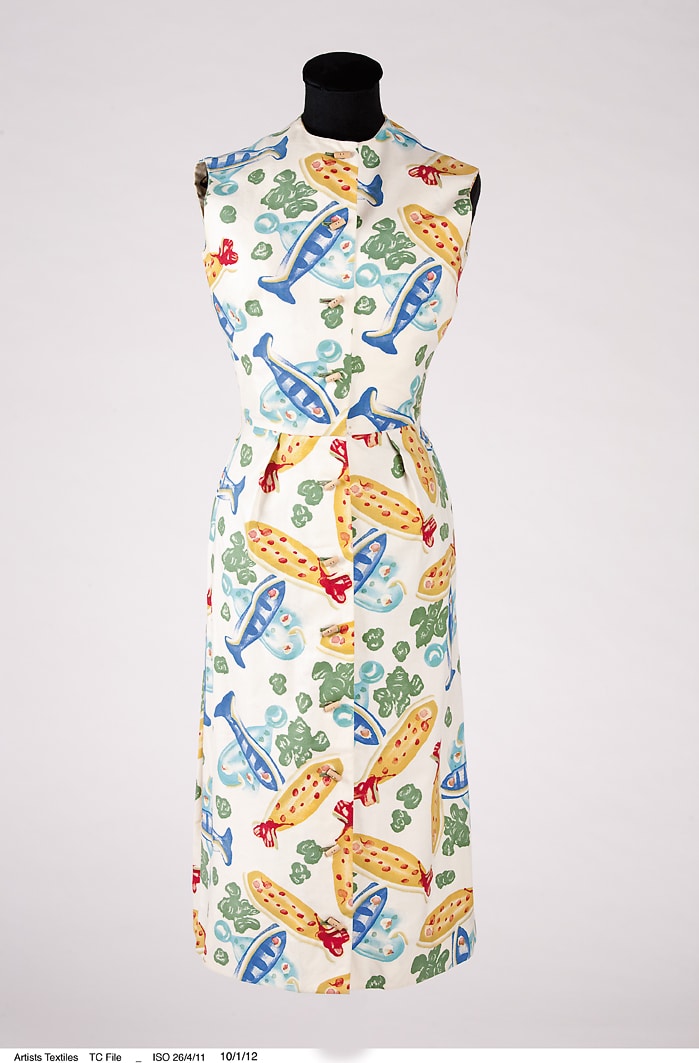
Dress by Claire McCardell using Picasso’s Fish fabric, 1955, for Fuller Fabrics