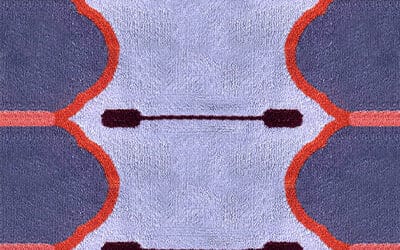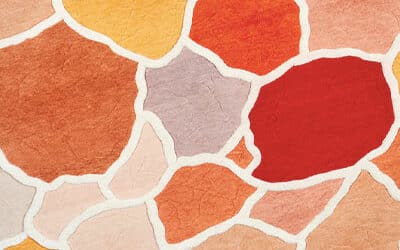
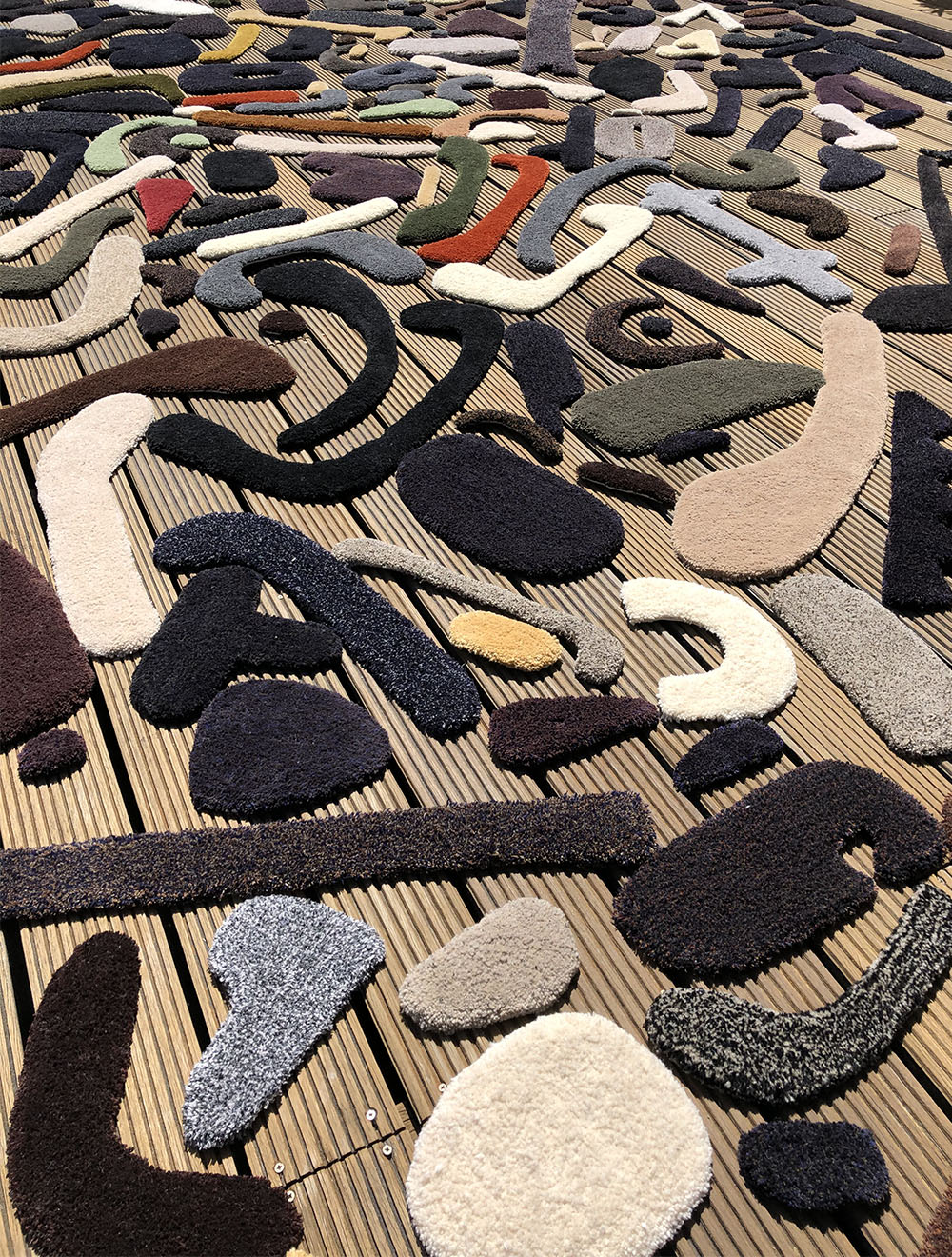

Mira Sohlén creates her improvisational, sculptural, assemblage-like ‘shape study’ tapestries with a gun tufter—a rug-making technique where a hand-held gun-like electrical tool creates a pile surface in lieu of the traditional techniques of hand-weaving and hand-knotting. She builds each ‘Opus’ or composition vertically from a ‘crown’, but before she can build she must tuft. The tufting gun shoots millimetre-long tufts into a vertically suspended woven matrix ground. The result—a pile surface that can be sheared and sculpted in a similar fashion to woven and knotted rugs—belies the technical and artistic possibilities that can be achieved. Artists like Sohlén are pushing the boundaries of gun tufting and finding the technique lends itself to shapes and forms well outside the typical rug repertoire. (See COVER Spring 2020 ‘Drawing inspiration’). But make no mistake, a tool is only as good as the artist wielding it, and in the hands of Mira Sohlén the tufting tool facilitates works of art.
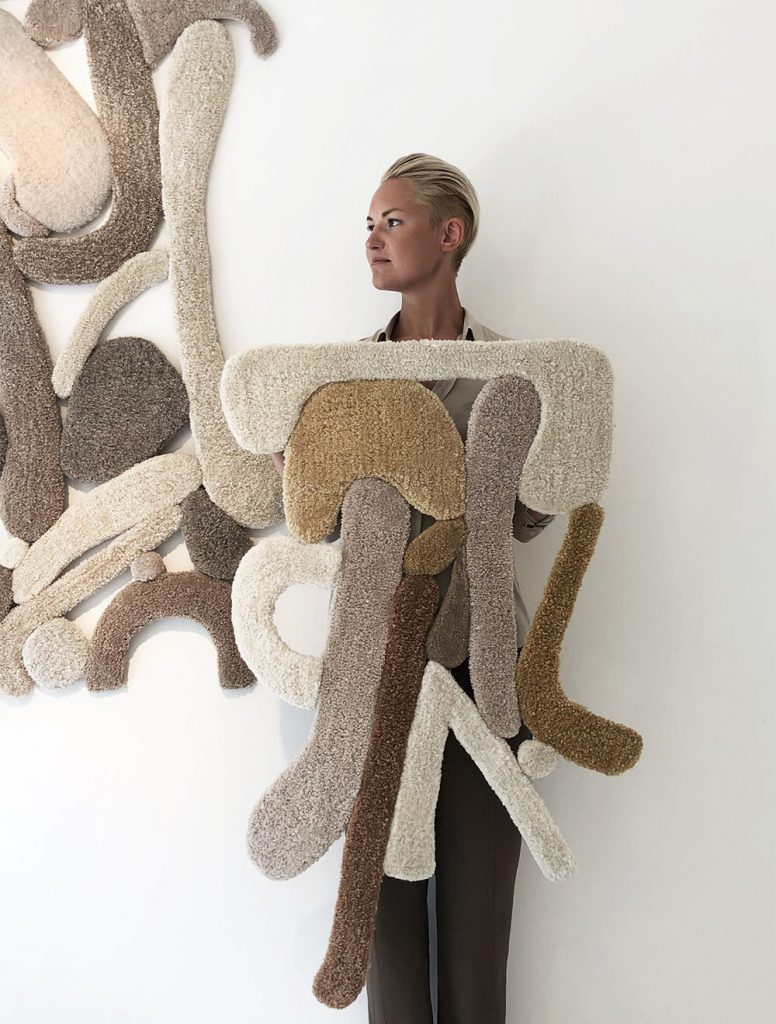
Sohlén’s path to tapestries and gun tufting was idiosyncratic, but not unpredictable. She studied fashion at Amsterdam Fashion Institute and the Rietveld Academie and went on to design clothing which gave her grounding in ‘a whole spectrum of yarns, tailoring and production’. But how did fashion lead to tufting? Sohlén’s backstory is chock-full of rug and textile influences. ‘My grandmother taught me to sew and weave,’ she explains, ‘and my mother dyed wool to make felt pillows she sold at Stockholm’s famous Designtorget; she also worked as a Global Textile Manager for IKEA.’ Sohlén’s partner owns vintage design and art Gallery Alain Hens in Antwerp which gives her opportunities to study his rug and textile discoveries.
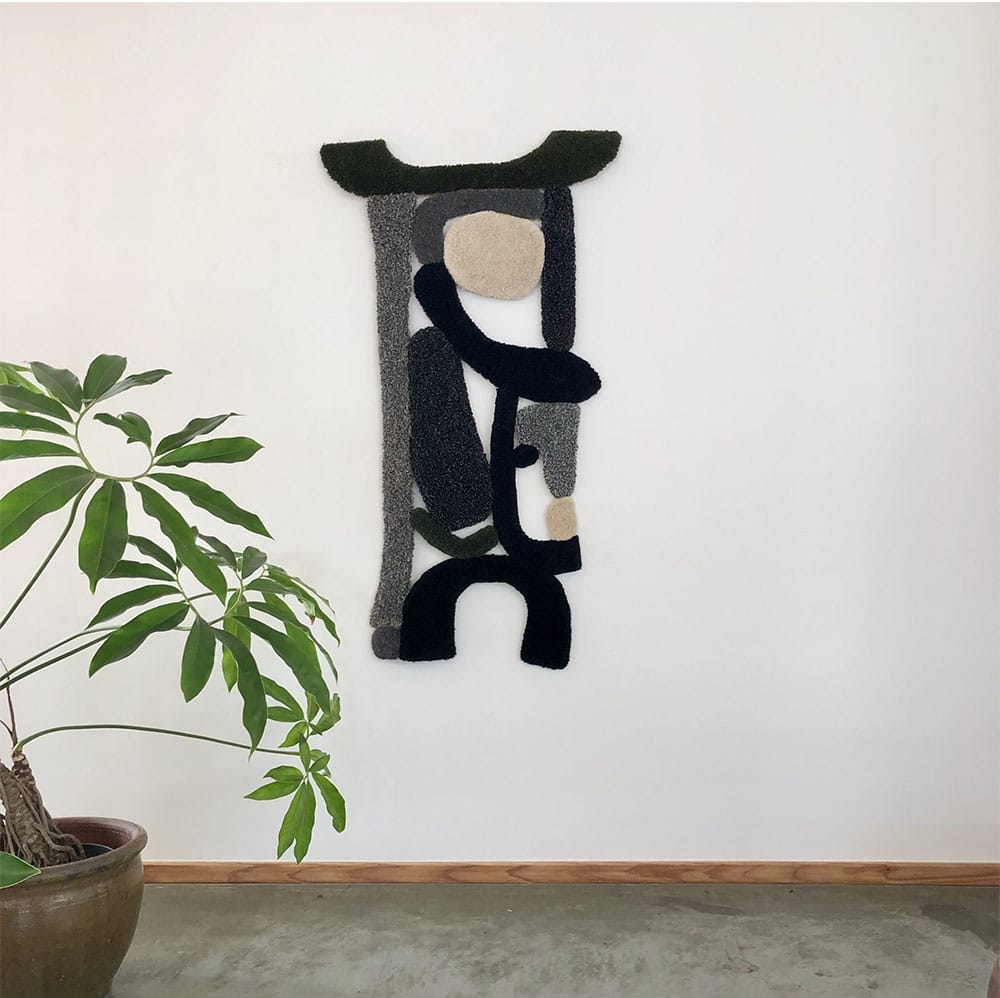
Sohlén’s inspiration is vast: from Rodney Graham’s improvisational music, experimental writing and poetry, nature, 20th-century artists like Hungarian husband and wife sculptors Vera and Pierre Székeley, and historic art and design magazines like DOMUS. ‘I agree I am perhaps a new iteration of a Constructivist, but ultimately my designs emerge from my understanding of geometrics through tailoring and pattern-drawing.’
Sohlén’s background pointed in the direction of rug making, but it took a global pandemic to enable her to leave fashion behind. Sohlén describes the relentless fashion cycle and the burn-out that swept through the fashion world before COVID. ‘The last four years as a designer required much diligence and future thinking, season after season,’ she says. Sohlén had been experimenting with tufting since 2018, but lack of time hindered progress. ‘COVID-19 quarantine gave me pause—personally, spiritually and literally—and created the possibility of a new chapter.’ Sohlén was able to discover a silver lining within the coronavirus cloud.
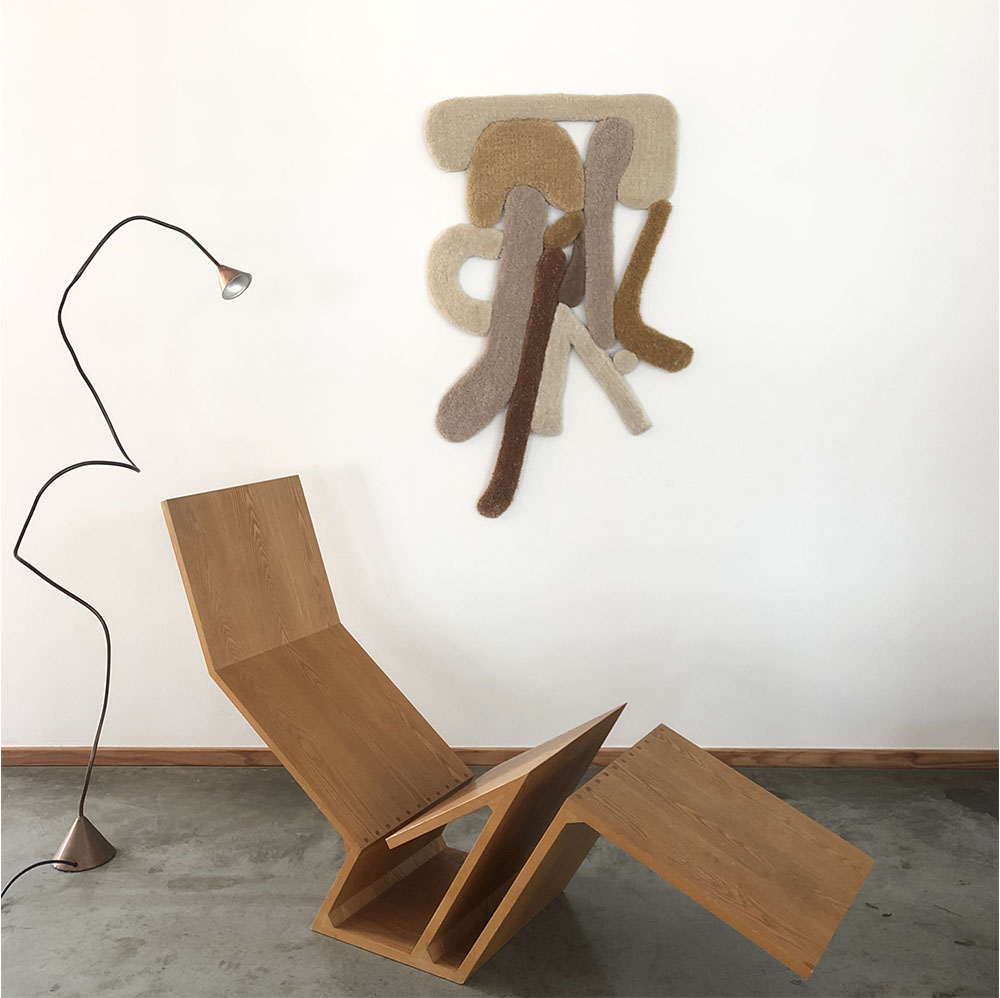
‘There is something very improvisational about my work,’ she says. Each tapestry is an ‘Opus’ from the Latin word for music composition. ‘The tapestries refer to a visual form of music; the shapes can be compared to musical notes and beats,’ she explains. Each tufted ‘note’ becomes a pattern piece and the notes come together as a composition. ‘I was always intrigued by the art of puzzling garment patterns onto the fabric to create the most space efficient layout.’ It’s a long process of visualising negative and positive space—edits are as important as additions. Unlike a garment however, Sohlén doesn’t know the outcome in advance. She creates as she moves pieces. ‘It’s enormously labour-intensive,’ she confirms, ‘but I love to work with my hands.’ Sohlén declares a work complete when she ‘finds a comforting unity in the layout.’
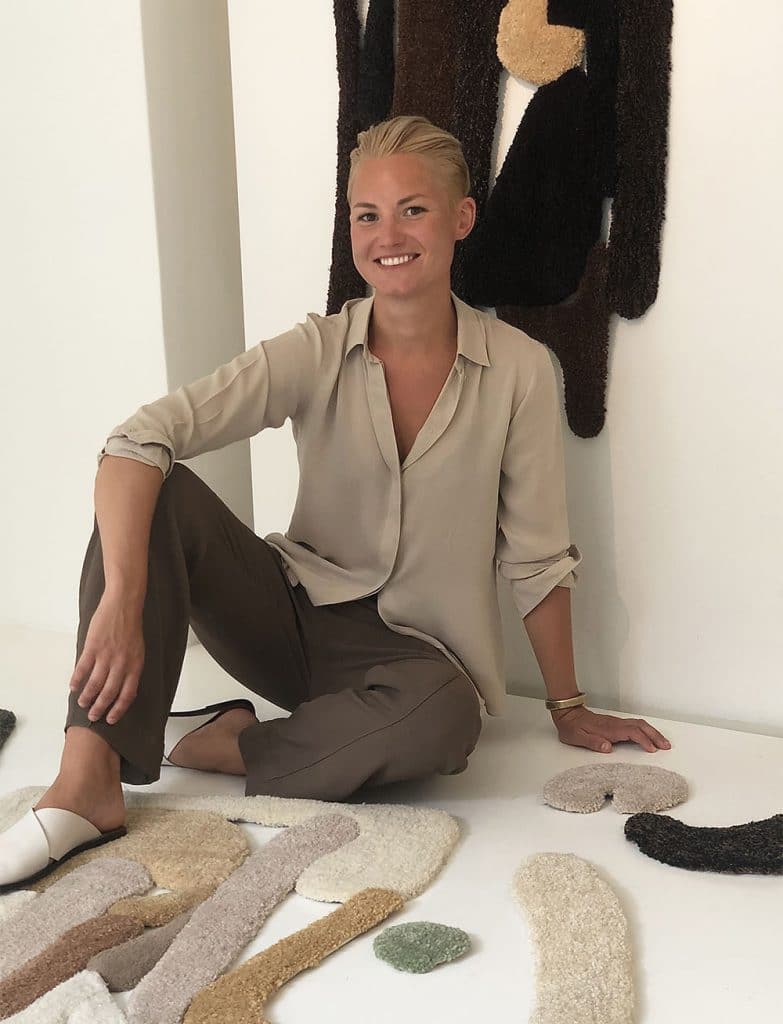
She dedicates each tapestry to her grandmother who taught her how to sew and who instilled in her a love of textiles. ‘She was born deaf,’ says Sohlén, and communicated through visual cues, sign language and lip reading. ‘I was fascinated that she could dance in rhythm; she could feel the music through sound vibration.’ These biographical details reveal a hidden layer to Sohlén’s Opus tapestries. Her negative and positive shapes and construction seem to shun the psychology of visual perception and instead prioritise ‘speaking’ and interpreting the world through the language of signs: semiotics. The materials Sohlén uses are sustainable, organic and luxurious. Her surfaces are tactile and palpably joyful. And her message needs no words; each Opus vibrates with personal feeling and universal meaning.