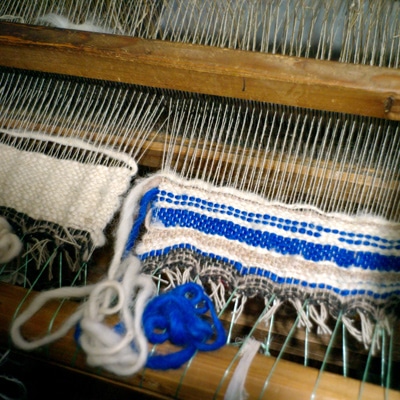

Last month, four international design experts, Roberto Baciocchi, Laura Snoad, Anna Lina Leno and Madeleine Asplund, embarked on the first-ever design expedition to Ukraine with FAINA Collection. In the village of Yavoriv, the participants experienced the ancient technique of making Hutsul wool carpets. COVER spoke with Nataliia at FAINA to find out how the designers interacted with the weavers, and what the outcomes were. The following details the ‘story of liznyky’:
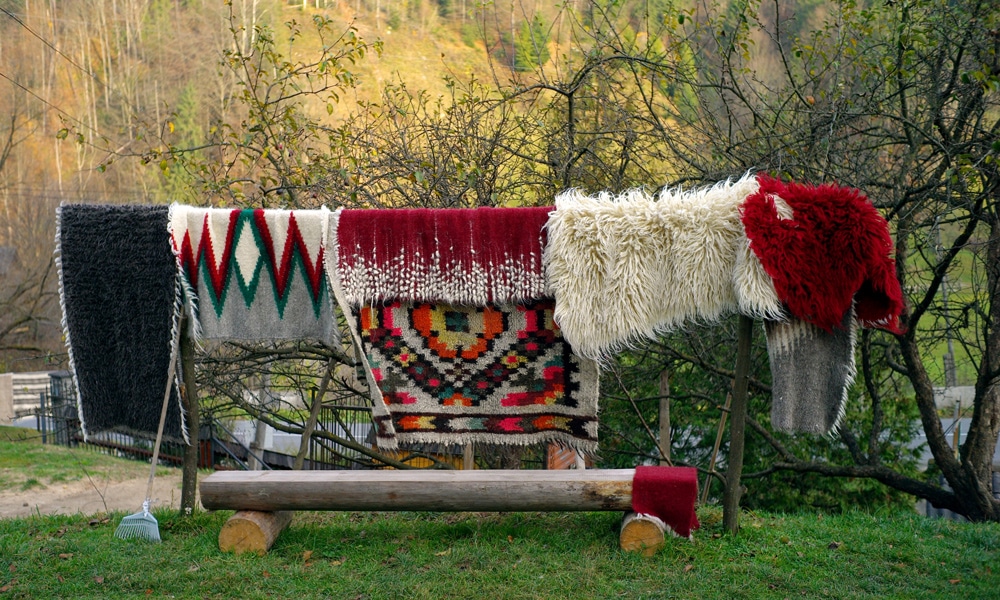
‘Lizhnyk are traditional hand-woven carpets or blankets from the so-called “Hutsul region” of the Carpathian Mountains in Western Ukraine. Originally lizhnyk were used as carpets, bedspreads or tapestries, and had ritual, decorative and practical purposes. They were used to cover beds, stoves, benches and shelters during sleep, often used instead of a pillow. In summer, they were laid on the seats of carts, and in winter on the seats of sleighs or carriages, and under horses’ saddles.
Lizhnyk are brightly coloured, dominant, decorative features, hung on the wooden walls of Ukrainian interiors. In the past, it was a sign of the families’ good property status to own a lizhnyk, and their number in the house suggested the wealth of the young bride.
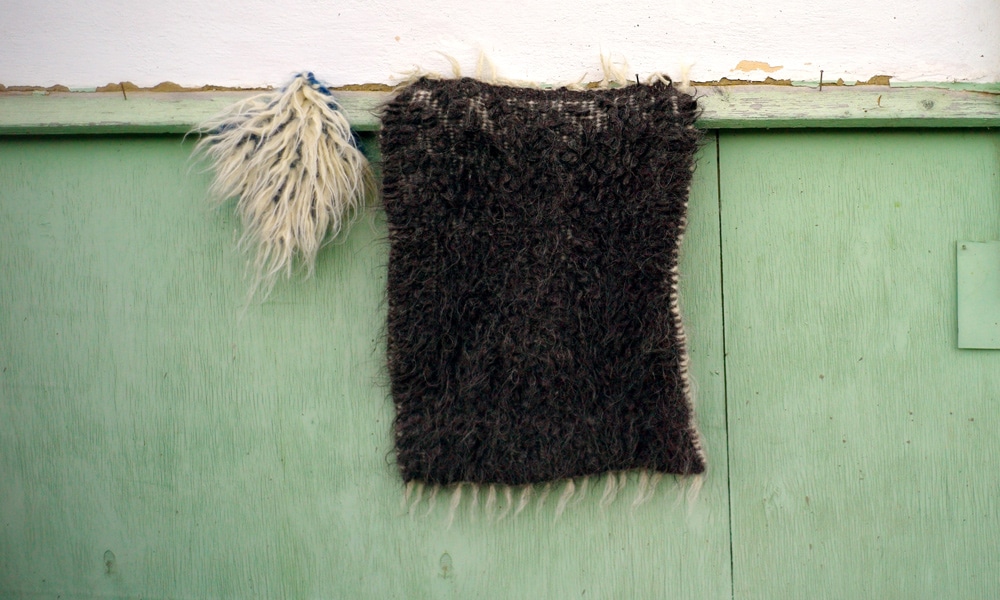
The oldest types of Hutsul lizhnyk were normally monochromatic and cross-striped. The colour pallet was dictated by the natural colour of the wool: white, two shades of grey, brown and black tones. In addition, folk masters widely used natural vegetable dyes. The carpets’ ornamentation is dominated by geometric shapes, featuring diamonds, triangles and lines. Organic patterns are also popular, including flowers, plants and trees. It is believed that lizhnyky can improve the microclimate in the house, and even maintain the temperature of the room, due to the hygroscopicity of the wool itself.
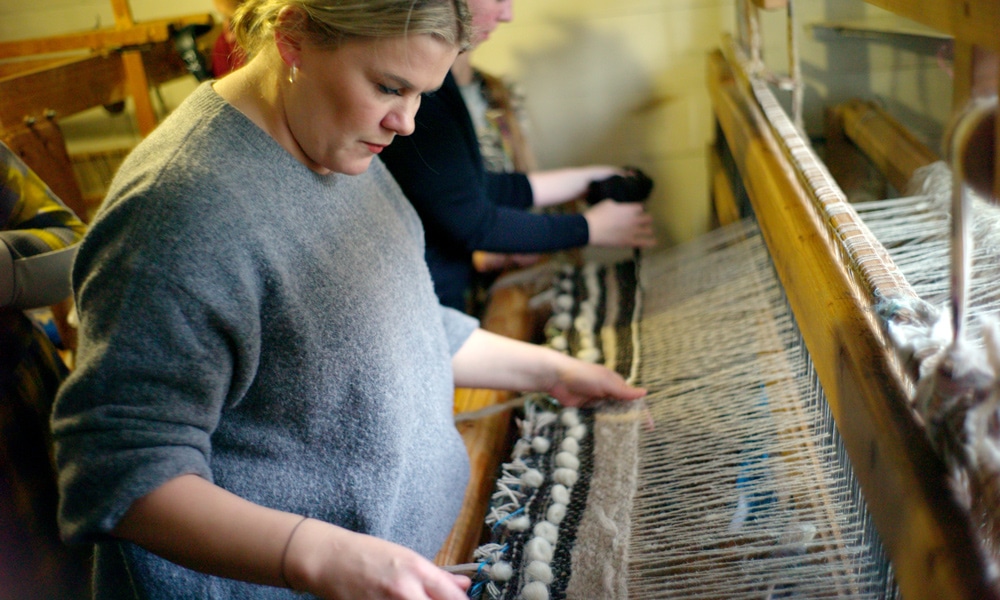
In Ukraine lizhnyky were made mostly by women. The craft was taught from parents to children, especially girls. Thus, the art of making carpets was transmitted from generation to generation. The foundation normally consists of thin, firm, tightly hatched wool. The base is joined with longer fibres of the wool and woven together, during the weaving process it is gently beaten with a stick, resulting in a thick, sparse fabric. After that, lizhnyky are sealed in a roller, as a result of which the product reduces in size. After drying, they are scratched and thick pile appears on the surface.
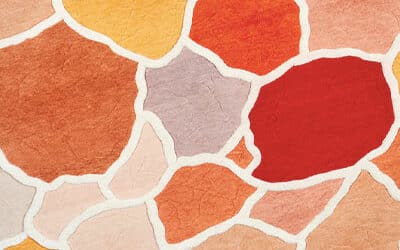
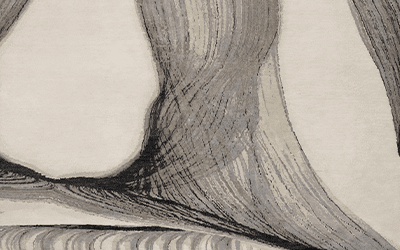
During the expedition we visited one family that still works with the traditional technique of weaving lizhnyky. Each of the designers made their own small carpet. They all turned out very different, in accordance with the culture and design vision of the participants.
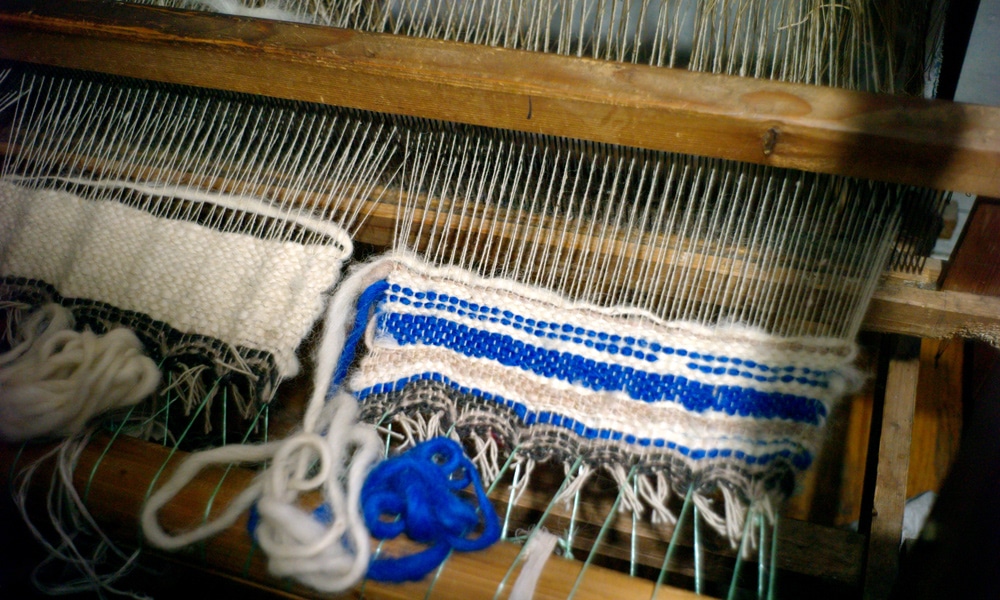
Interior designer Madeleine Asplund Klingstedt (Sweden) commented on her experience of visiting Ukraine – “Being part of the Ukrainian design expedition was an exciting adventure. Not knowing much about Ukraine from before I got the chance to see both the countryside, architecture, the cities and foremost the extinct handicrafts of Ukraine. In today’s mass-producing society, handicraft objects are what we appreciate the most. Things that have a heritage, history and have been made with someones bare hands. The black ceramics, the wood workers and the rug makers took ‘handmade’ in to a new perspective, not only the finished product was handmade, the very tools with which they produced were handmade.”
Laura Snoad (UK) commented: “On the Ukrainian expedition, I was impressed by the fact that with the help of these craft techniques you can touch the experience and knowledge of your ancestors. We also have crafts, but still there is no such direct connection, there are no stories about family recipes that are passed from great-grandmothers and mothers to daughters. I find the idea of inheriting knowledge from ancestorst very inspiring.”
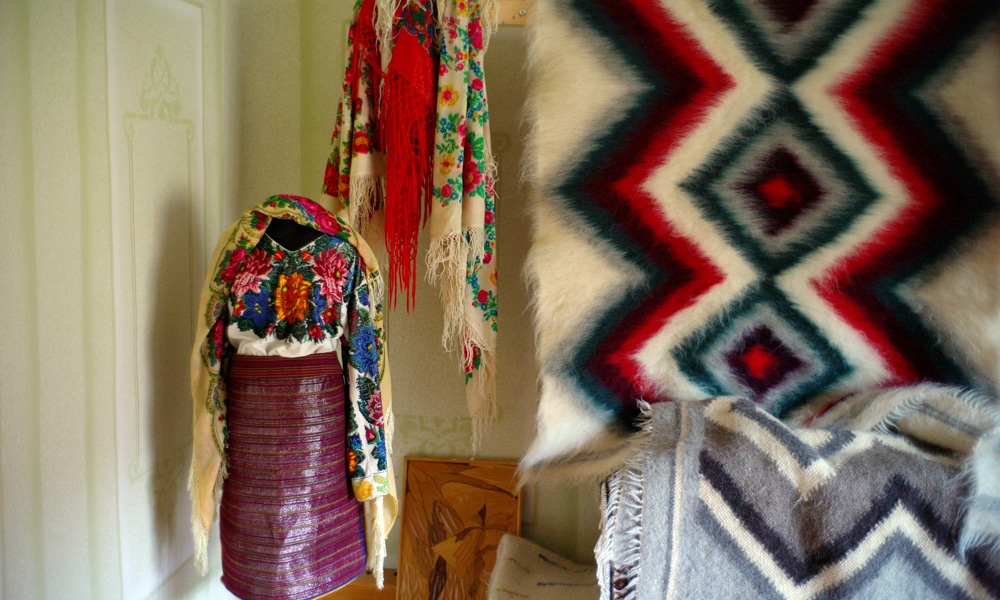
Italian architect Roberto Baciocchi commented on his purchase of 19 Hutsul carpets for his future interior projects – “The patterns of the Carpathian lizhnyky are very authentic, I think, the monochrome variants of these will suit a certain interior. I consider them very unique, what is done by the hands of a master has a completely different energy; each flaw of such a thing represents dignity, uniqueness, character.”
Anna Leena Leno (Sweden) commented: “During the expedition, I tried weaving, and I really enjoyed making the lzhnyk. But most of all I was struck by the hard work of people in the Carpathian region. I was very inspired that they are involved in the process from the very beginning to the end. In Sweden, there are no such things anymore; we have technology involved in these processes. I think if you take something old and turn it into something new – it always inspires”.’
.